

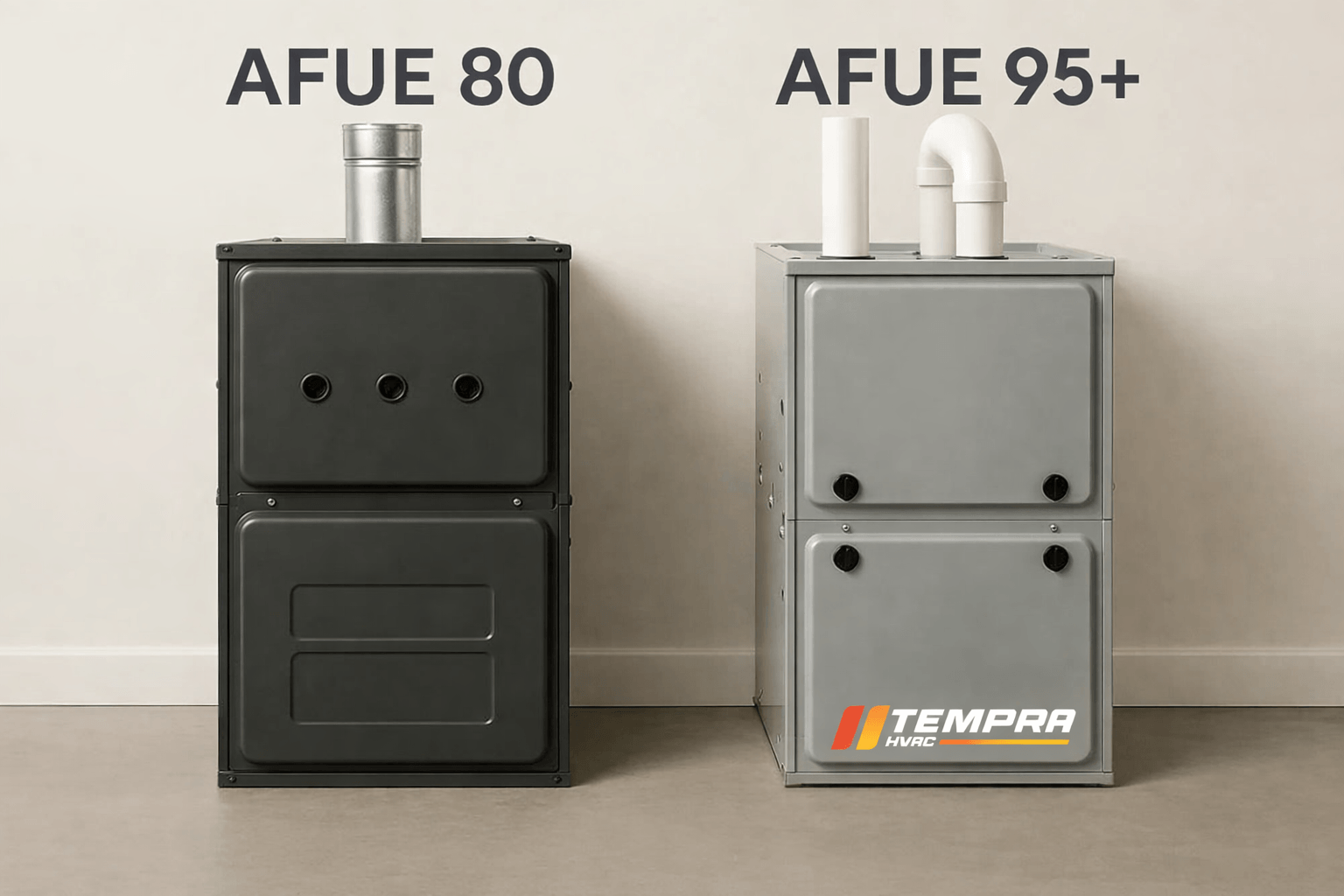
80% Furnace (Standard Efficiency): Pros, Cons, and Best Use
An 80% gas furnace is often the easiest option when replacing an older unit, especially in homes already vented through a chimney or B-vent. These systems are widely used, reliable, and usually come with lower installation complexity.
Pros: lower upfront cost, simpler replacement, compatible with existing metal venting, fewer modifications required, solid option for older homes.
Cons: higher gas usage compared to 95%+, less energy-efficient long-term, may not qualify for certain rebates depending on programs and equipment.
Best for: homeowners who want an affordable replacement, homes with existing chimney/B-vent venting, quick furnace swaps, and properties where major venting changes would add too much cost.
95%+ Furnace (High Efficiency): Pros, Cons, and Best Use
A 95%+ high-efficiency furnace is a great upgrade for many Washington homes, especially if your goal is maximum efficiency and improved comfort. These furnaces use sealed combustion, pull more heat from the burn process, and vent through PVC pipes. Because this process creates condensation, a high-efficiency furnace also needs a proper condensate drain and correct vent routing.
Pros: lower monthly heating costs in many homes, higher efficiency, sealed combustion for safety, improved comfort, often qualifies for rebates or incentives when available.
Cons: higher upfront cost, additional installation requirements (PVC venting + drain), more sensitive to incorrect setup (sizing, airflow, venting slope, drainage).
Best for: long-term homeowners, customers focused on lower gas usage and higher efficiency, comfort upgrades, and homes where PVC venting and drainage can be installed properly without excessive complexity.
Which Furnace Is Better for Washington Homes?
For the Seattle area climate, both 80% and 95%+ furnaces can heat a home effectively. The best choice comes down to cost vs long-term value and your existing setup. If your home already has a good chimney/B-vent and you want the lowest upfront cost, an 80% furnace can be a smart and practical option. If you want better efficiency and long-term savings (and the home can support the venting/drain requirements), a 95%+ furnace is often worth it.
Choose an 80% furnace when you want a budget-friendly replacement, minimal modifications, and you already have compatible venting. Choose a 95%+ furnace when you want higher efficiency, sealed combustion benefits, and you plan to stay in the home long-term.
What Matters More Than 80% vs 95%? Installation Quality.
The biggest mistake homeowners make is focusing only on efficiency numbers. In reality, a properly installed furnace matters more than the AFUE rating. A high-efficiency furnace can still perform poorly if it’s oversized, airflow is wrong, or venting and drainage are not installed correctly. The most common issues we see after bad installs include incorrect sizing, low airflow from restricted ductwork, improper gas pressure, poor vent slope, noise, short cycling, and uneven heating between rooms. That’s why a good furnace replacement should include proper sizing guidance and an airflow check—not just a quick swap.
Furnace Replacement Cost in Washington: What Impacts Pricing?
The cost of furnace installation in Washington depends on more than the unit itself. The final price typically depends on furnace size (BTU), home layout, ductwork condition, venting requirements, gas line and electrical connections, filter setup, and local permit needs. High-efficiency furnaces can cost more because venting often needs to be rerouted, a condensate drain must be added, and the overall job requires more time and precision.
A low quote may look attractive, but cheap installs often skip important steps like checking airflow, correcting venting issues, installing proper drainage, or completing a clean commissioning process. Those details affect comfort, reliability, safety, and system lifespan.
80% vs 95% Furnace: Quick Recommendation
If you want the most affordable replacement and your home already has chimney/B-vent venting, an 80% furnace is a solid option. If you want the best efficiency, sealed combustion benefits, and long-term value, a 95%+ furnace is usually the better investment—especially when installed correctly with proper airflow and venting.
Schedule a Furnace Estimate With Tempra HVAC
At Tempra HVAC, we help homeowners choose the right system based on their home setup, comfort needs, and budget. We provide professional furnace replacement and furnace installation across Seattle, Bellevue, Everett, Lynnwood, Bothell, Lake Stevens, and nearby areas. ✅ Licensed • Bonded • Insured | ⭐ 5-Star Reviews
📞 Call/Text: 206-466-0202 | 🌐 temprahvac.com