

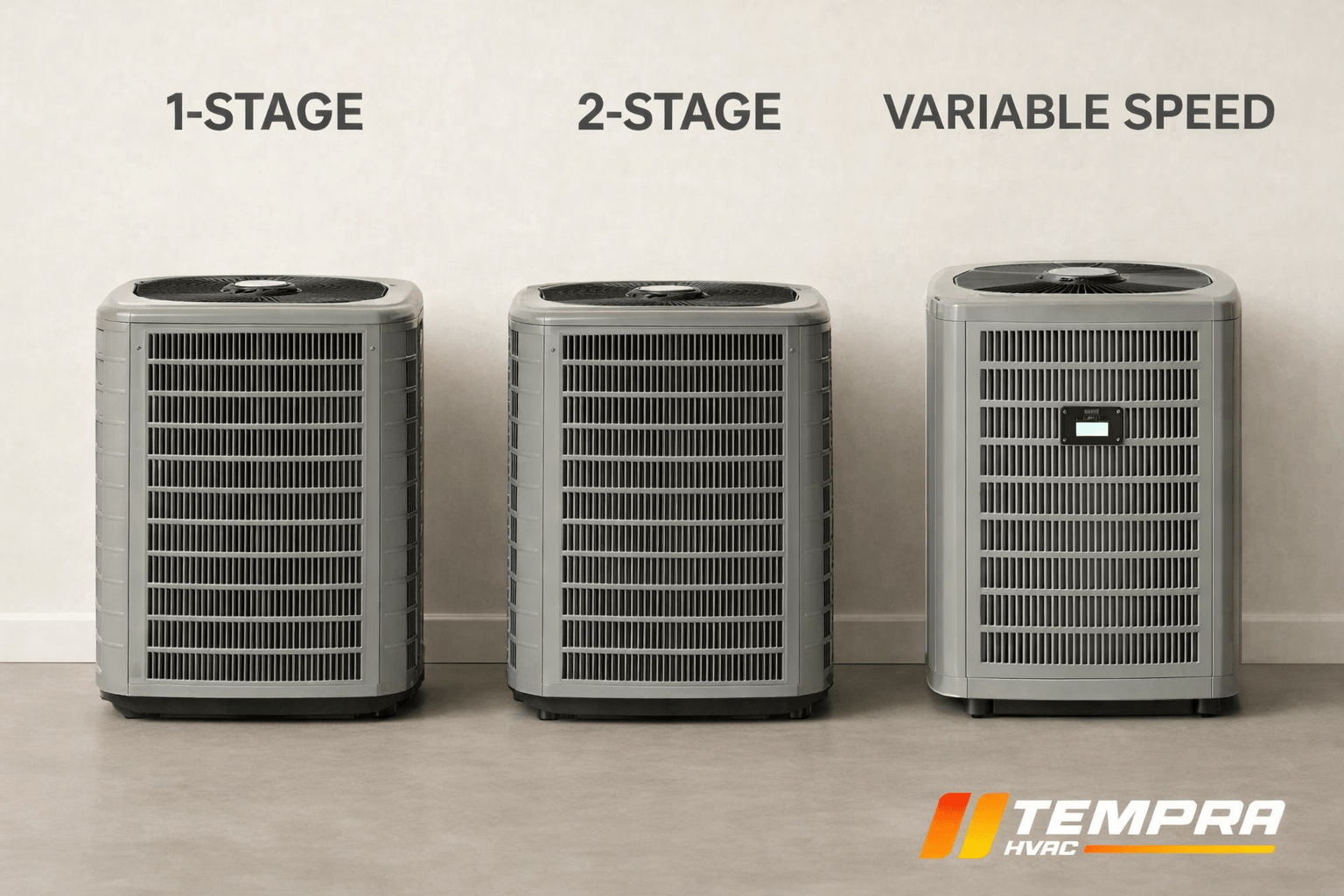
1-Stage AC (Single Stage): Simple and Budget-Friendly
A 1-stage air conditioner runs only one way: full power when it turns on, then completely shuts off when it reaches temperature. It’s the most common option for basic replacements.
Pros: lower upfront cost, simple design, easy replacement, reliable when properly installed.
Cons: more temperature swings, louder starts/stops, less humidity control, can feel “drafty” or uneven in larger homes, often higher long-term energy use compared to advanced systems.
Best for: smaller homes, rentals, budget replacements, homes with good insulation and balanced ductwork.
2-Stage AC: Better Comfort and Efficiency
A 2-stage AC has two cooling levels. Most of the time it runs on the lower stage, which keeps the temperature more stable and improves comfort. It switches to high stage during hotter days or when the home needs fast cooling.
Pros: more consistent temperature, better comfort, quieter operation, improved humidity control, lower energy use in many homes.
Cons: higher upfront cost than 1-stage, requires correct airflow and thermostat setup, benefits depend on proper duct design.
Best for: medium-to-large homes, homes with sun exposure, customers who want a noticeable comfort upgrade without going fully variable.
Variable Speed AC (Inverter): Maximum Comfort and Quiet Operation
A variable speed (inverter) AC continuously adjusts output to match what your home needs. Instead of blasting cold air and shutting off, it runs longer at low speed and maintains steady comfort. This is the most advanced option and often feels the smoothest.
Pros: best temperature stability, quietest operation, best humidity control, highest efficiency potential, gentle airflow and consistent comfort.
Cons: highest upfront cost, installation quality is critical, ductwork must support correct airflow, diagnostics/repairs can be more complex than basic systems.
Best for: homeowners who want premium comfort, quiet cooling, better humidity control, and top efficiency—especially in larger homes or homes with uneven temperatures.
Which AC System Is Best for Washington Homes?
Washington summers are usually mild compared to very hot states, but homes here can still overheat because of sun exposure, poor airflow, and weak insulation. A 1-stage AC can be enough for basic cooling, but many homeowners prefer 2-stage or variable speed for smoother comfort and quieter operation.
Choose 1-stage if you want the lowest cost and your home cools evenly.
Choose 2-stage if you want better comfort, quieter operation, and improved performance on warm days.
Choose variable speed if you want the most stable temperature, lowest noise, and the best overall comfort experience.
What Matters More Than Stages? Proper Sizing and Airflow.
Even the best AC system will struggle if it’s installed wrong. A quality installation should include correct sizing, duct airflow evaluation, and proper refrigerant setup. Oversized systems often short-cycle (turn on/off too fast), which reduces comfort and humidity control. Undersized systems run nonstop and still don’t cool well. Proper installation is the difference between an AC that feels amazing and one that feels disappointing.
AC Installation Cost in Washington (What Affects Pricing)
AC pricing depends on system size, home layout, duct condition, electrical requirements, permits, and equipment type (1-stage vs 2-stage vs variable). Higher-end systems cost more, but can deliver better comfort and efficiency when installed correctly. Low quotes sometimes skip important work like duct improvements, correct line set practices, evacuation, commissioning, and permit requirements.
Tempra HVAC Air Conditioning Installation in Washington
At Tempra HVAC, we help homeowners choose the right AC system for their comfort goals and budget, with clean professional installation and proper airflow setup. ✅ Licensed • Bonded • Insured | ⭐ 5-Star Reviews
📍 Serving Seattle, Bellevue, Everett, Lynnwood, Bothell, Lake Stevens & nearby areas
📞 Call/Text: 206-466-0202 | 🌐 temprahvac.com